Cold holding
Reach-ins and prep-line coolers that can't hold temperature during service, overloaded walk-ins and food left out during prep. We check equipment, loading and log routines.
Restaurant food safety · Miami, FL
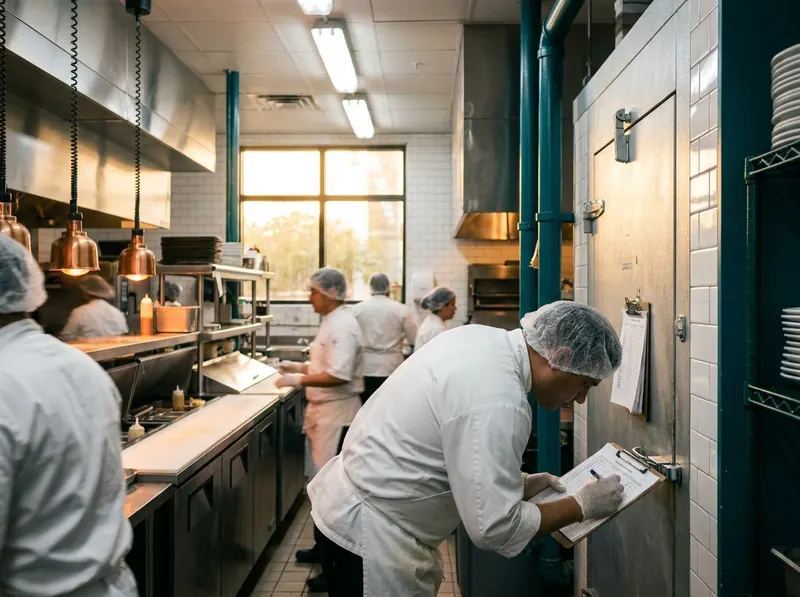
We walk your kitchen the way a DBPR inspector does, fix the issues behind high-priority violations, and train cooks and managers in English and Spanish so the kitchen stays inspection-ready between visits.
Who inspects restaurants in Miami? In Florida, restaurants and other public food service establishments are licensed and inspected by the Department of Business and Professional Regulation (DBPR), Division of Hotels and Restaurants. Inspectors classify violations as high priority, intermediate or basic. A consultant helps you find and fix those issues before the inspector does.
Juan S. VargasSQF Food Safety Auditor · Exemplar Global
Who it's for
Owners and chefs who received a warning or a call-back inspection, or who want a clean record before opening a second location.
Multi-unit operators in Miami-Dade and Broward that need the same SOPs, logs and training in every kitchen, whoever the manager on shift is.
High-volume kitchens with cook-chill, batch cooling or specialized processes that need written procedures and, in some cases, a HACCP plan.
The problem
Most kitchens that get high-priority violations know the rules. The problem is that rules break down at 8 p.m. on a Saturday, when the walk-in door is open every minute, a new line cook doesn't know the cooling procedure and the manager on duty is covering the pass. Inspectors see the kitchen as it runs, not as it was trained.
An inspection is a snapshot of your worst ten minutes. Systems are what make that snapshot boring.
The rules
DBPR's Division of Hotels and Restaurants licenses and inspects public food service establishments across Florida, including Miami-Dade and Broward. Inspectors apply the food code adopted by the state and classify each violation by risk.
| Violation class | What it means | Examples |
|---|---|---|
| High priority | Could contribute directly to foodborne illness or injury | Cold-held food above safe temperature, improper cooling, employees not washing hands when required, evidence of rodent activity in food areas |
| Intermediate | Could lead to risk if not corrected; often supports high-priority controls | Missing required manager certification or employee training records, thermometers not available |
| Basic | Best practices and conditions that support good sanitation | Damaged floor tiles, lights without shields, clutter in storage areas |
| Requirement | Who | Deadline |
|---|---|---|
| Certified Food Protection Manager | Food service managers | Within 30 days of employment |
| Approved food handler training | Food employees | Within 60 days of hire |
Restaurant or food plant? DBPR regulates restaurants and food service. Food manufacturers, warehouses and grocery stores are permitted and inspected by FDACS, Division of Food Safety. If your commissary also sells packaged food wholesale, the rules may change; see our HACCP consulting and FSMA compliance pages.
Top issues
Reach-ins and prep-line coolers that can't hold temperature during service, overloaded walk-ins and food left out during prep. We check equipment, loading and log routines.
Large batches of rice, beans, stocks and braises cooled in deep containers. We set up a written cooling method with shallow pans, ice baths and time-temperature logs.
Blocked sinks, missing soap or towels, and gloves used instead of washing. We fix the station setup and train when and how to wash.
Gaps under doors, drain issues, cardboard storage and pest service reports nobody reads. We review the program with your pest control provider.
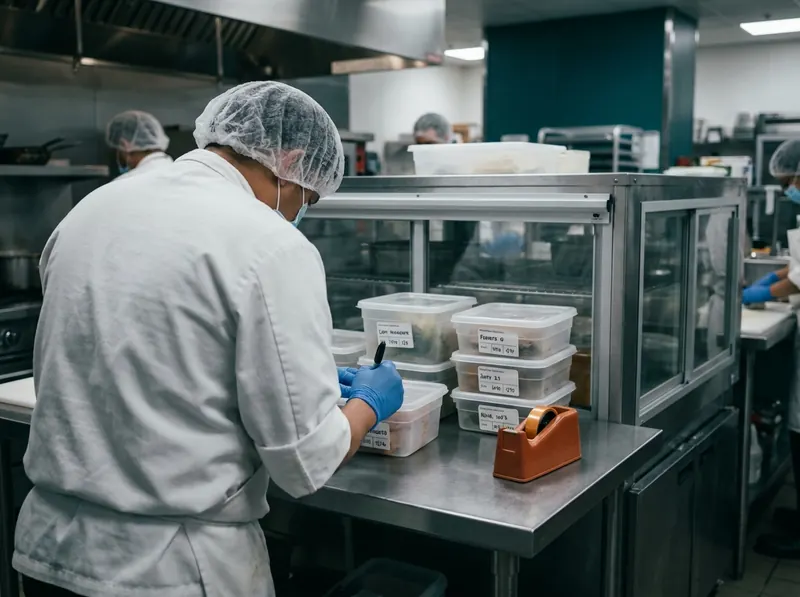
Ready-to-eat, time/temperature-controlled foods held past their use-by date or without labels. We build a simple, color-coded labeling system cooks actually follow.
Sous vide, curing, smoking for preservation or reduced-oxygen packaging may require a HACCP plan or other approval under the food code. We help write and implement it.
What's included
A good SOP fits on one page, uses the names of your own equipment and says what to do when something goes wrong. Our cooling SOP, for example, names the pans, the ice bath or blast chiller, who takes the temperature, where it is written down and what happens to the batch if it doesn't cool in time. We post short versions at the station, in English and Spanish, with photos taken in your kitchen. Managers get a short self-inspection routine to run at the start of each shift, so small problems are fixed before they turn into a high-priority violation on an inspection report.
How we work
We review your last inspection reports and walk the kitchen during service, checking temperatures, cooling, handwashing, storage, pest control and records.
You receive: mock inspection report with violations classified by DBPR risk level.
We write SOPs and logs for your menu and equipment, fix station setups with your team and train staff in English and Spanish on the floor.
You receive: kitchen SOP binder, daily logs, training records.
We return to verify practices during service, coach managers on self-inspections and help respond to any inspection findings.
You receive: follow-up report and a manager self-inspection checklist.
Miami-Dade & Broward
Miami kitchens run on bilingual teams, high seasonal volume and menus that rely on slow-cooked proteins, rice, beans and seafood, which makes cooling and cold holding the recurring risks. We work on-site in Brickell, Miami Beach, Coral Gables, Wynwood, Doral, Fort Lauderdale and across Miami-Dade and Broward, including early-morning prep and late service when needed.
For restaurant groups, we standardize SOPs across locations so managers can move between kitchens without relearning the system. For a self-check between visits, read our Florida restaurant inspection checklist.
Results
CASE 01 · RESTAURANT GROUP, 3 LOCATIONS
Brickell & Miami Beach, FL
6 weeks
Illustrative engagement · real client data pending authorization
FAQ
It depends on the number of locations, the size of the menu and whether you need SOPs, training, a HACCP plan for a specialized process or ongoing visits. We quote a fixed scope after a 30-minute gap call.
High-priority violations are those that could contribute directly to foodborne illness or injury, such as improper cold holding or cooling, lack of handwashing, or evidence of pests in food areas. DBPR also records intermediate and basic violations.
Food service managers must be certified as Certified Food Protection Managers within 30 days of employment, and food employees must complete approved food handler training within 60 days of hire.
No one can guarantee an inspection result. What we do is find and correct the issues inspectors cite most, and set up routines and training so your kitchen runs the same way on inspection day as on any other day.
Yes. Training sessions, SOPs and logs are available in English and Spanish, and we train on the line with your own equipment so cooks see exactly what to do.
Free gap call
In 30 minutes we review your standard, your date and your most likely gaps, and tell you honestly whether you need us.
Juan S. VargasSQF Food Safety Auditor · PCQI
Request a gap call or a quote
Takes under a minute. Juan reviews every request personally.