Food safety consultant · Fort Lauderdale & Broward County
Food safety consultant in Fort Lauderdale and Broward County
From importers moving containers through Port Everglades to seafood processors and multi-unit restaurant groups, Broward's food businesses answer to FDA, FDACS, DBPR and demanding buyers. We prepare them on-site.
What does a food safety consultant do in Fort Lauderdale? We help Broward importers build FSVP and Seafood HACCP programs, prepare processors and distributors for BRCGS or SQF certification, and get restaurant and food service groups ready for Florida DBPR inspections, with on-site gap analysis, bilingual training and mock audits.
Juan S. VargasSQF Food Safety Auditor · Exemplar Global
Certified SQF auditorExemplar Global · 2024
On-site, hands-onMiami-based · across the U.S.
English & SpanishBilingual training
Free 30-min gap callReply within one business day
Broward's food economy
Port, seafood and food service: three very different clients
Fort Lauderdale's food businesses fall into three broad groups, and each is regulated differently. Port Everglades, one of Florida's major seaports, brings in refrigerated and dry food containers that are received by importers and warehouses across Broward. The coast supports seafood importers, processors and distributors. And a large hospitality sector, from beachfront restaurants to hotel kitchens and catering, means food service groups with many locations and high staff turnover.
Broward food businesses and their main requirements
Business
Main regulator
What buyers or inspectors ask for
Importer via Port Everglades
FDA
FSVP files, supplier verification, FSMA 204 records for listed foods
Seafood importer or processor
FDA; FDACS for Florida permits
Seafood HACCP (21 CFR 123), histamine control, BRCGS or SQF
If your company is the U.S. importer of food arriving through Port Everglades, FSVP (21 CFR 1 Subpart L) makes you responsible for verifying your foreign suppliers. We build the hazard analysis per food, supplier evaluations, verification activities and corrective action records, and we work with Latin American suppliers in Spanish. See FSMA and FSVP compliance.
Seafood HACCP
Seafood importers and processors must meet the Seafood HACCP rule, including importer verification for imported fish and fishery products. For species such as tuna and mahi-mahi, histamine control through the cold chain is the core hazard. We write the plan by species and process and set receiving and storage controls. See HACCP consulting.
Traceability deadline. Many seafood and fresh produce items are on FDA's Food Traceability List. The FSMA 204 compliance date is July 20, 2028: key data elements at critical tracking events, traceability lot codes and records to FDA within 24 hours of a request.
Certification
BRCGS and SQF certification for Broward processors
Broward processors and distributors that sell to national retailers, cruise lines or food service chains are often asked for a GFSI certificate. BRCGS Food Safety Issue 9 is common with buyers that have European or international ties; SQF is widely requested by U.S. retailers. We compare the two against your customer list, then take you through gap analysis, system build and a mock audit. See BRCGS and GFSI consulting and SQF consulting.
These case records show what the process looks like from gap analysis to certification in South Florida plants:
CASE 01 · READY-TO-EAT MANUFACTURER
42,000 sq ft · Medley, FL
Standard
SQF Food Safety Code: Manufacturing
At gap analysis
47 gaps (6 major)
At certification audit
Certified · 0 major, 3 minor
Outcome
SQF score 94 (Good)
14 weeks
Illustrative engagement · real client data pending authorization
CASE 02 · PRODUCE IMPORTER & PACKHOUSE
28,000 sq ft · Doral, FL
Standard
PrimusGFS
At gap analysis
38 gaps in the FSMS module
At certification audit
Certified · 96% overall
Outcome
Buyer approval secured
10 weeks
Illustrative engagement · real client data pending authorization
CASE 03 · BAKERY & SNACK CO-PACKER
65,000 sq ft · Hialeah, FL
Standard
BRCGS Food Safety Issue 9
At gap analysis
52 gaps (9 major)
At certification audit
Certified · Grade A
Outcome
Retail supply contract kept
20 weeks
Illustrative engagement · real client data pending authorization
Food service
Restaurants and food service groups in Fort Lauderdale
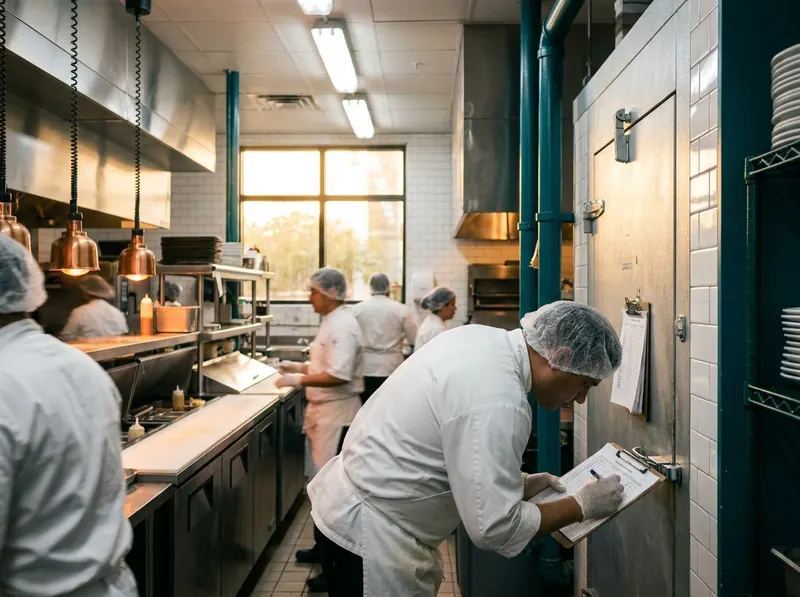
Restaurants in Broward are licensed and inspected by DBPR's Division of Hotels and Restaurants, which classifies violations as high priority, intermediate or basic. Food service managers must hold a Certified Food Protection Manager certification within 30 days of employment, and food employees need approved food handler training within 60 days of hire. For groups with several locations and seasonal staff, keeping every kitchen at the same standard is the real challenge.
Unannounced mock inspections using DBPR's violation categories
Kitchen SOPs for receiving, cold holding, cooling and reheating
Bilingual training for line cooks, prep and dish teams
HACCP plans for sous vide, curing or reduced-oxygen packaging
Broward is within easy reach of our Miami base, so we work on-site for every phase: the gap analysis on your dock, plant or kitchen, staff training, and the mock audit or mock inspection. For restaurant groups we schedule visits around service hours. Besides Fort Lauderdale, we work with clients in Dania Beach, Hollywood, Davie, Plantation, Sunrise, Pompano Beach and the rest of the county, and in neighboring Miami-Dade. See all service areas.
FAQ
Frequently asked questions
Does an importer using Port Everglades need its own food safety program?
Yes, in most cases. Under FSVP the U.S. importer must verify its foreign suppliers, even if a customs broker handles entry and a third-party warehouse stores the product. Some foods and situations are exempt or have modified requirements, which we review with you.
Is BRCGS or SQF better for a Broward seafood company?
The better choice is the one your buyers accept. Both are GFSI-benchmarked. We check your main customers' requirements and your operation before recommending one, and a Seafood HACCP plan is needed either way.
Can you prepare our restaurants for DBPR inspections?
Yes. We run mock inspections in each kitchen, fix the practices behind high-priority violations, write SOPs and train staff in English and Spanish. We can't predict or guarantee inspection results, but we make sure nothing on the inspector's list is a surprise.
Do you work outside Fort Lauderdale, elsewhere in Broward County?
Yes. We work on-site throughout Broward County, as well as Miami-Dade and Palm Beach, and schedule visits across the rest of Florida and the U.S.
Free gap call
Have an audit on the calendar?
In 30 minutes we review your standard, your date and your most likely gaps, and tell you honestly whether you need us.